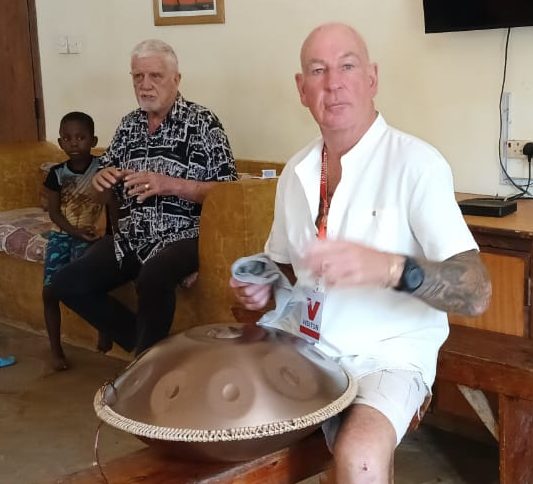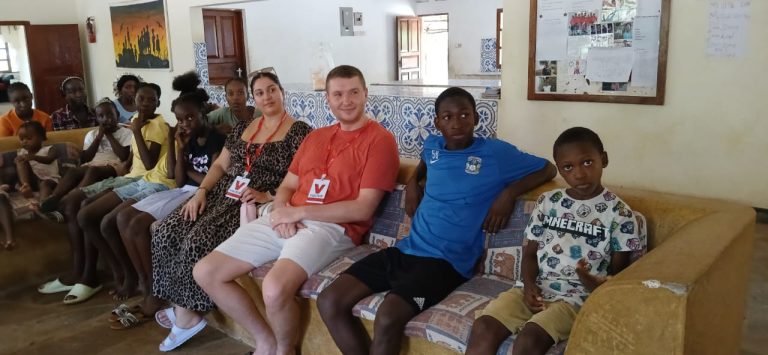
Our Happy House children were absolutely fascinated this week when they had the chance to discover the handpan — a relatively new musical instrument known for its melodic, resonant, and soothing tones.
A good friend of Papa Dave, Alan, visited Kids Club and brought along his handpan to share with us and to play a tune he has spent six months rehearsing.
The children listened in wonder as he played, filling the room with calming, bell-like sounds that are often used for meditation, relaxation, and healing.
He also showed them how the handpan’s vibrations can be felt through the body, explaining how these gentle sound waves are used as a form of therapy to promote calmness and wellbeing.
The children loved not only hearing the instrument but also experiencing its comforting vibrations for themselves.
It was a beautiful moment of learning, curiosity, and peace — and a wonderful reminder of how music can connect, inspire, and heal.
But the children were just as curious about where this unusual instrument came from — and it turns out the handpan has a fascinating story.
According to Wikipedia the earliest ancestor of the handpan is the steelpan, created in Trinidad and Tobago in the 1930s, when local musicians discovered they could shape discarded oil drums into tuned instruments capable of producing beautiful melodies.
Inspired by the steelpan, two Swiss instrument makers — Felix Rohner and Sabina Schärer — created the world’s first modern handpan, called the Hang, around the year 2000 in Bern, Switzerland.
They combined influences from the steelpan with instruments such as the Indian ghatam, Thai gong, and Indonesian gamelan to craft a completely new sound. The Hang quickly captured worldwide interest for its soft, ethereal tone. As its popularity spread, other makers began developing their own versions.
By 2007, the word “handpan” emerged as a general name for this growing family of instruments